












Gold Loan vs Personal Loan: What Is the Difference?
 Cholamandalam
 22 Sep 2026
 7 Min Read
 Gold Loan
 121 Reads
- What Is a Gold Loan?
- What Is a Personal Loan?
- Gold Loan vs Personal Loan: Key Differences
- When Should You Consider a Gold Loan?
- When Should You Consider a Personal Loan?
- How Do Gold Loans and Personal Loans Compare for Quick Cash?
- Conclusion
- Frequently Asked Questions
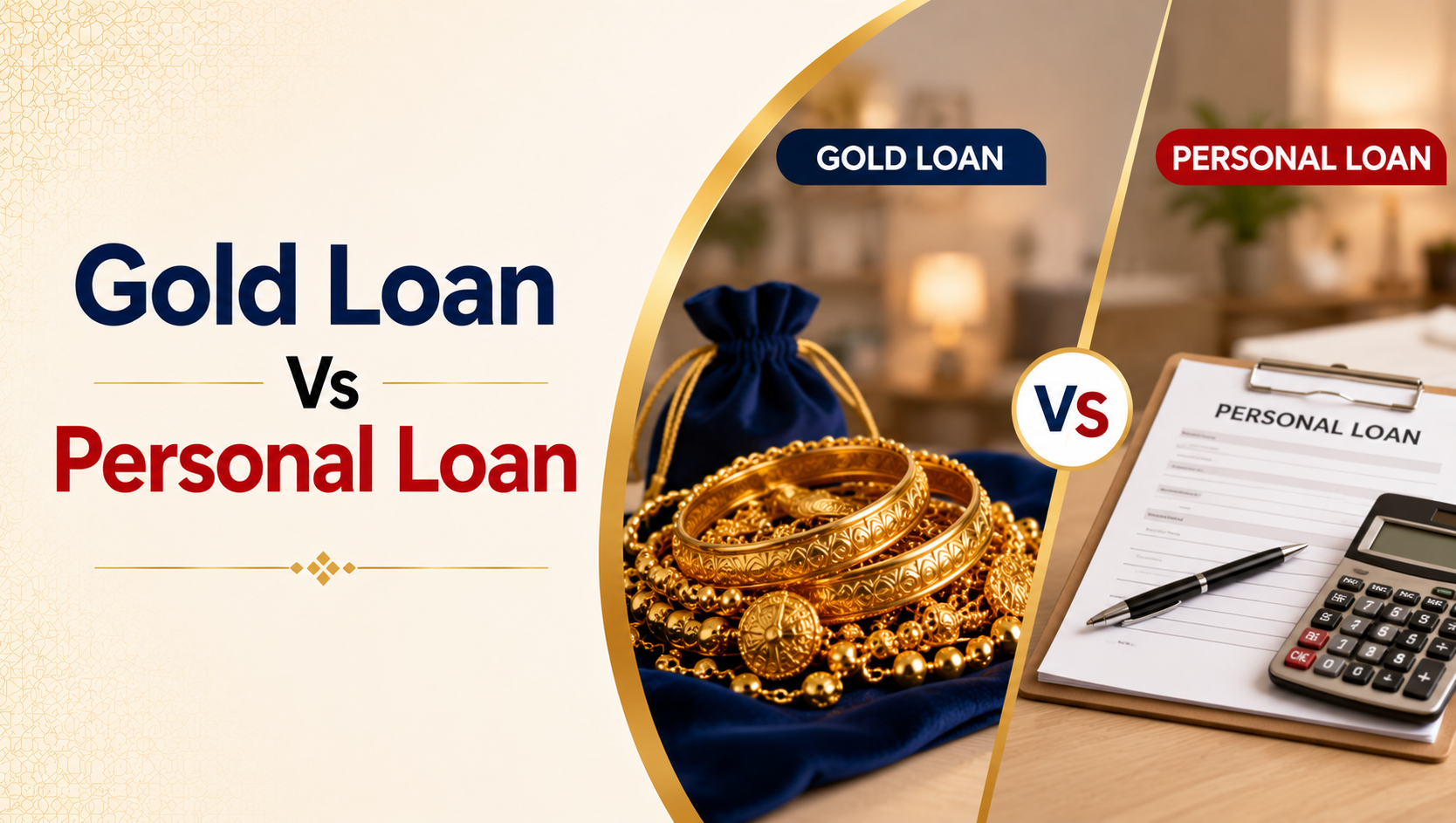
Life can bring major milestones and unexpected financial requirements, whether you are expanding a business, funding education, planning a wedding or managing day-to-day expenses. When looking for flexible financing, gold loans and personal loans are two options that can provide access to funds.
Although both can be used to meet personal and financial requirements, their loan structures, eligibility criteria, documentation, approval processes and repayment terms are different. Understanding these differences can help you evaluate which type of financing is more suitable for your requirements.
What Is a Gold Loan?
A gold loan is a short- to medium-term credit option where you pledge eligible gold ornaments, jewellery or certified gold coins or biscuits as collateral with a financial institution in exchange for funds.
A gold loan is secured by the pledged gold. The eligible loan amount is linked to factors such as the purity, weight and applicable market value of the gold. Once the principal and applicable interest have been paid in full, the lender returns the pledged gold to the borrower in accordance with the applicable loan terms.
What Is a Personal Loan?
A personal loan is an unsecured credit option that does not require the borrower to pledge an asset as collateral. The approval and applicable interest rate are generally dependent on factors such as the borrower's financial profile, credit history and monthly income.
Since there is no physical asset pledged as security, the lender evaluates the borrower's financial and credit profile to determine eligibility and applicable loan terms.
Gold Loan vs Personal Loan: Key Differences
The key differences between a gold loan and a personal loan can be understood by comparing their loan structure, eligibility, documentation, processing time, interest rates, loan amount, repayment options and tenure.
| Feature | Gold Loan | Personal Loan |
|---|---|---|
| Loan Nature | Secured loan backed by eligible physical gold jewellery or ornaments. | Unsecured loan that does not require collateral or asset pledging. |
| Eligibility Focus | Primarily considers the purity and weight of the pledged gold, with less reliance on credit score. | Considers factors such as stable monthly income, employment profile and credit history. |
| Documentation | Generally requires basic KYC documents such as identity and address proof, subject to the lender's requirements. | May require financial documentation such as salary slips, bank statements, income tax returns and KYC documents. |
| Processing Time | The source states that processing can be rapid, with disbursal typically within 30 to 60 minutes at the branch. | The source states that standard verification can take 1 to 3 working days, excluding pre-approved instant offers. |
| Interest Rates | Generally competitive due to the secured nature of the loan. Applicable rates vary by lender and loan scheme. | Rates depend on factors such as the borrower's credit profile, income and applicable lender terms. |
| Loan Amount | Determined based on the applicable Loan-to-Value (LTV) ratio and the value of the pledged gold. | Generally determined based on factors such as disposable income and debt-to-income considerations. |
| Repayment Options | May include regular EMIs, interest-only servicing or bullet repayment, depending on the loan scheme. | Generally repaid through fixed monthly instalments over a structured tenure. |
| Tenure | Typically short to medium term, depending on the lender and loan scheme. | Typically medium to long term, depending on the lender and borrower's eligibility. |
| Collateral Requirement | Requires eligible gold to be pledged as collateral. | No physical collateral is required. |
When Should You Consider a Gold Loan?
A gold loan may be considered in situations where you have eligible gold assets and require access to funds. The source identifies the following circumstances:
- Urgent financial requirements: A gold loan can be considered when you require access to funds quickly.
- Idle gold assets: If you have eligible gold jewellery that is not currently being used, you can consider leveraging it as collateral rather than selling the asset.
- Limited credit history or income documentation: A gold loan may be an option when obtaining unsecured credit is difficult because of your credit profile or lack of formal income documentation.
- Flexible repayment requirements: Depending on the lender and loan scheme, gold loans may offer different repayment structures.
When Should You Consider a Personal Loan?
A personal loan may be considered when you do not have eligible gold to pledge or prefer not to use physical assets as collateral.
- No gold assets available: A personal loan does not require gold or another physical asset to be pledged as collateral.
- Strong financial profile: Borrowers with a stable income and strong credit history may qualify for applicable unsecured loan terms.
- Preference for unsecured borrowing: A personal loan can be considered by borrowers who do not want to pledge physical assets.
- Longer repayment period: Personal loans may provide structured monthly repayment over a longer tenure, depending on the lender's terms.
How Do Gold Loans and Personal Loans Compare for Quick Cash?
Both gold loans and personal loans can provide access to funds, but the process of obtaining them is different.
A gold loan is secured against eligible gold, so the assessment focuses on the pledged asset, including its purity, weight and applicable value. This can allow the loan to be processed quickly once the gold is assessed and the required documentation is completed.
A personal loan is unsecured, so the lender generally needs to evaluate factors such as income, employment and credit history before determining eligibility and applicable terms.
The appropriate financing option depends on factors such as whether you have eligible gold available, how quickly you require the funds, your financial profile, your preference regarding collateral and your repayment capacity.
Conclusion
Gold loans and personal loans are both financing options, but they differ significantly in how they are secured, assessed and repaid.
A gold loan requires eligible gold to be pledged as collateral, with the loan amount linked to the applicable LTV and value of the gold. A personal loan is unsecured and generally depends more heavily on factors such as income, employment and credit history.
When comparing the two, consider your available assets, urgency of funds, documentation requirements, applicable interest rate, repayment tenure and ability to meet the repayment obligations before selecting a financing option.
Frequently Asked Questions
What is the main difference between a gold loan and a personal loan?
A gold loan is a secured loan where eligible gold is pledged as collateral, while a personal loan is an unsecured loan that does not require physical collateral. Personal loan eligibility generally considers factors such as income and credit history, while a gold loan is primarily linked to the value and purity of the pledged gold.
Which loan is approved faster?
According to the source, gold loans can be processed faster, with the source stating that cash may be provided within 30 to 60 minutes at the branch, subject to the applicable process and eligibility. Personal loans generally involve financial verification, although pre-approved offers may have different processing timelines.
Do I need a good credit score to get a gold loan?
A gold loan is secured against pledged gold, so credit score may have less influence on eligibility compared with an unsecured personal loan. However, the lender's applicable eligibility criteria and assessment process still apply.
Which loan offers a lower interest rate?
Interest rates vary by lender, loan product and borrower profile. Gold loans may offer competitive rates because they are secured against gold, while personal loan rates generally depend on factors such as the borrower's credit and financial profile.
What documents are needed for a gold loan?
Gold loan documentation generally includes basic KYC documents such as government-issued identity proof and address proof, subject to the lender's requirements.
What documents are required for a personal loan?
Personal loans may require financial verification documents such as recent salary slips, bank statements, income tax returns and KYC documents, depending on the lender and the borrower's profile.
How much loan amount can I get?
For a gold loan, the eligible amount is determined based on factors such as the purity and weight of the gold and the applicable Loan-to-Value (LTV) ratio. For a personal loan, the loan amount depends on factors such as income, financial profile and the lender's applicable eligibility criteria.
Are there restrictions on how I can use the money?
Depending on the lender's terms, both gold loans and personal loans can be used for a range of personal or business requirements, including medical expenses, business needs and other eligible financial requirements.
Is my gold safe while pledged to the lender?
Lenders store pledged gold in secure facilities during the loan tenure, subject to their applicable security, storage and insurance policies. The gold is returned after the applicable loan obligations have been fulfilled.
Which option should I consider for a sudden financial emergency?
The choice depends on your circumstances. A gold loan may be considered if you have eligible gold and require quick access to funds, while a personal loan may be considered if you have a strong financial profile and prefer not to pledge physical assets.
For more information about Chola Gold Loans, visit:
 Previous Blog
About the Author
 Cholamandalam
Latest Blogs from this Author
Blogs you might also like


 06 Aug 2024
7 Min Read
Cholamandalam
06 Aug 2024
7 Min Read
Cholamandalam
 01 Nov 2024
7 Min Read
Cholamandalam
01 Nov 2024
7 Min Read
Cholamandalam
 01 Jan 2025
7 Min Read
Cholamandalam
01 Jan 2025
7 Min Read
Cholamandalam
 02 Jan 2025
7 Min Read
Cholamandalam
02 Jan 2025
7 Min Read
Cholamandalam
 08 Jan 2025
7 Min Read
Cholamandalam
08 Jan 2025
7 Min Read
Cholamandalam
Connect with us on


Quick Financial Support