











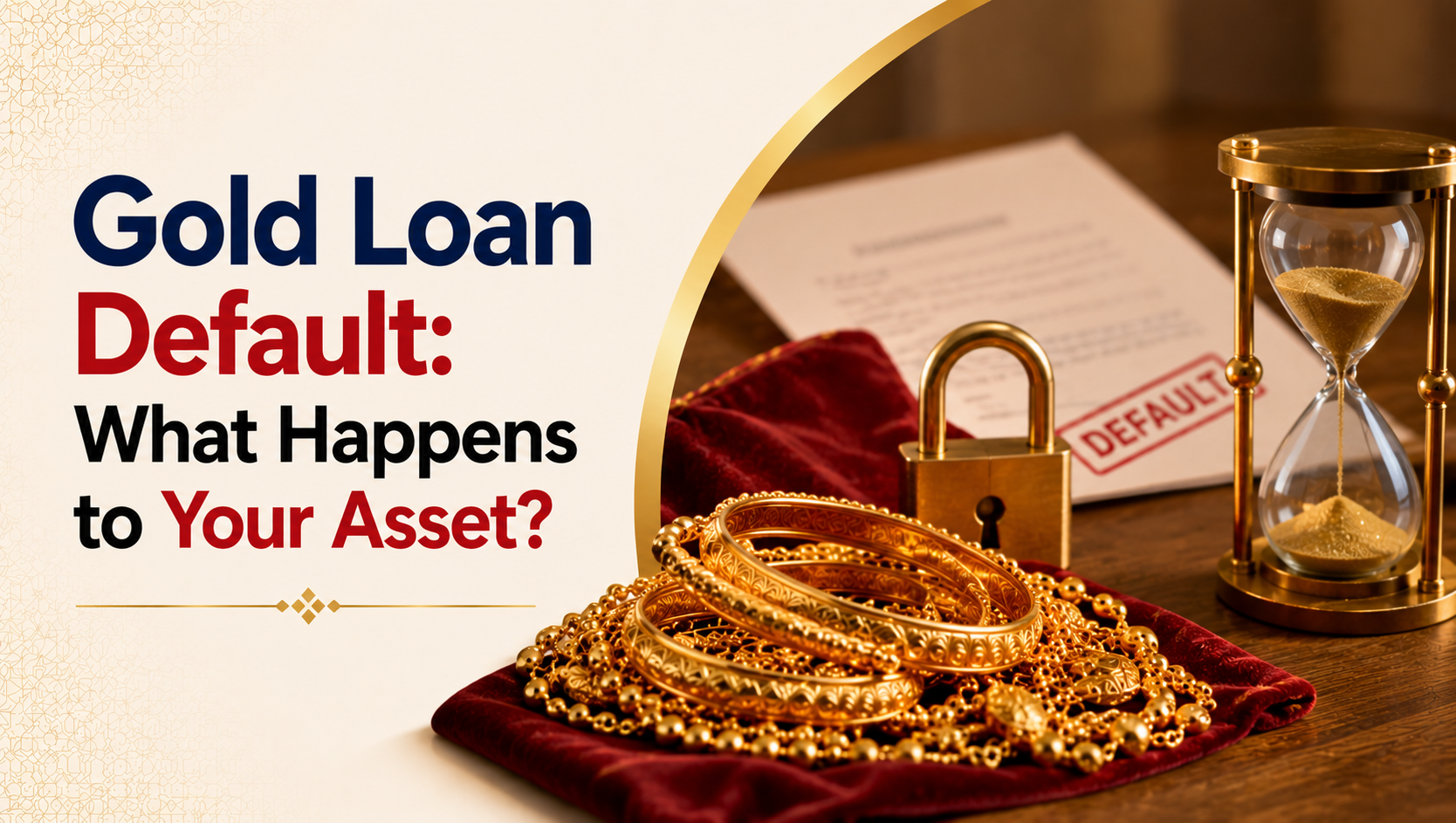
What Happens to My Gold If I Can’t Repay the Loan on Time?
 Cholamandalam
 22 Sep 2026
 7 Min Read
 Gold Loan
 183 Reads
- What Are the Repayment Obligations Involved?
- What Happens When You Miss a Payment?
- What Are the Interest and Penalties Involved?
- How Is the Gold Loan Auction Processed?
- How Can I Avoid a Gold Loan Auction?
- What Are the Options Available to a Borrower?
- Why Choose Chola?
- Closing Thoughts
- Frequently Asked Questions (FAQs)
A gold loan is a short- to medium-term credit option where you pledge your gold ornaments, jewellery or eligible gold coins as collateral with a financial institution in exchange for funds.
Unlike some other forms of finance, a gold loan is secured against the gold pledged by the borrower. The approved loan amount is closely linked to factors such as the purity, weight and applicable value of the pledged gold. Once the principal and applicable interest have been repaid in full, the pledged gold is returned to the borrower as per the terms of the loan.
However, taking a gold loan also involves a financial repayment commitment. If you are unable to repay your gold loan on schedule, it is important to understand the steps that may follow. Missing a repayment does not mean that your gold is immediately seized. Instead, the recovery process follows a series of notices and steps that may provide opportunities to regularise the loan and protect the pledged gold.
What Are the Repayment Obligations Involved?
When you take a gold loan, you agree to repay the borrowed amount and applicable interest according to the repayment structure selected for the loan. Depending on the scheme, the repayment obligation may include one of the following:
- Regular EMI Structure: You are required to pay a monthly instalment consisting of the principal amount and applicable interest during the loan tenure.
- Interest Model: You may be required to pay interest on a monthly or quarterly basis, with the principal amount being repaid at the end of the tenure as a lump sum.
- Bullet Repayment: The principal and applicable interest are accumulated and paid together in a single payment at the end of the loan tenure.
What Happens When You Miss a Payment?
Missing a payment does not automatically mean that your pledged gold will be seized. The lender may follow a process involving reminders and notices before recovery proceedings are initiated.
Grace Period
After a missed repayment, lenders may provide a grace period during which borrowers receive reminders through communication channels such as calls, email and SMS. Interest may continue to accrue during this period, while the borrower is given an opportunity to clear the overdue amount.
Formal Default Notice
If the payment remains overdue, the lender may issue formal notices and reminders detailing the outstanding amount and communicating the consequences of continued non-payment, including information about potential auction proceedings.
What Are the Interest and Penalties Involved?
Penal Interest
In addition to the regular interest applicable to the gold loan, the lender may levy penal interest on overdue amounts or the outstanding balance during the period of delayed repayment, subject to the applicable loan terms.
Accrued Interest
When repayments remain unpaid, the outstanding cost of the loan can increase as applicable interest continues to accrue. Borrowers should therefore address overdue payments at the earliest possible opportunity.
Changes in the value of the pledged gold may also affect the Loan-to-Value (LTV) position. If the gold price falls significantly and the LTV moves beyond applicable safety limits, the lender may require partial repayment or other action in accordance with the applicable terms.
How Is the Gold Loan Auction Processed?
If the borrower does not respond to the notices or fails to regularise the outstanding dues, the lender may initiate recovery proceedings that can ultimately include an auction of the pledged gold. The process is carried out in accordance with applicable regulatory requirements and the lender's terms.
Reserve Price Setting
A reserve price is determined for the pledged gold based on applicable valuation methods and prevailing market rates.
Public Notification
The auction may be publicly announced in accordance with the applicable process. This provides the borrower with an opportunity to clear the outstanding dues before the auction takes place, subject to the applicable terms and timelines.
Surplus and Shortfall Management
The proceeds from the auction are used to settle the outstanding principal, applicable interest, penalties and other permissible charges. If the auction proceeds exceed the amount owed, the remaining surplus is returned to the borrower in accordance with the applicable process.
If the auction proceeds are insufficient to cover the total amount outstanding, the lender may have the right to pursue recovery of the remaining balance, subject to applicable law and the loan agreement.
How Can I Avoid a Gold Loan Auction?
Borrowers who are facing repayment difficulties can take timely steps to reduce the risk of their pledged gold reaching the auction stage.
Communicate Early
If you anticipate difficulty in meeting your repayment schedule, contact your lender before the account reaches a critical default stage. Early communication can help you understand the available repayment or account-management options.
Make Strategic Partial Payments
Where permitted by the lender, making partial payments can reduce the outstanding balance and may help improve the LTV position. It also demonstrates an intention to repay the loan.
Use Available Personal Funds
If possible, using available short-term personal funds to clear or reduce the outstanding gold loan can help prevent the loan from progressing towards recovery or auction proceedings.
What Are the Options Available to a Borrower?
Loan Renewal
Depending on the lender's terms and eligibility requirements, borrowers may be able to pay the accrued interest and renew or extend the gold loan for a new tenure.
Tenure Extension or Restructuring
If a borrower is experiencing temporary financial difficulty, the lender may consider options such as extending the tenure or restructuring the repayment arrangement, subject to applicable policies and eligibility.
Gold Part-Release
If multiple pieces of jewellery have been pledged, some lenders may offer a part-release facility. Under such an arrangement, the borrower may repay a portion of the outstanding loan and receive the corresponding eligible gold back, subject to the lender's terms.
Why Choose Chola?
At Chola, customer transparency and support are prioritised to help borrowers manage their gold loan repayment commitments.
Proactive Alerts
Borrowers receive timely reminders before due dates through SMS and registered communication channels, helping them stay informed about upcoming repayment obligations.
Dedicated Branch Assistance
If you anticipate difficulty in meeting your repayment schedule, you can approach your servicing branch. Relationship managers can help explain applicable options such as loan renewal, part-payment and restructuring, subject to eligibility and policy.
Transparent Guidance
Chola's customer support framework provides information regarding notices, account status, valuations and applicable repayment processes in accordance with the applicable terms and regulations.
Closing Thoughts
Failing to repay a gold loan on time can result in additional financial costs and may eventually put the pledged gold at risk of auction if the outstanding dues remain unpaid.
However, understanding the repayment timeline and communicating with the lender early can help borrowers explore available options. Depending on the applicable terms, options such as partial payments, loan renewal, tenure extension or restructuring may help borrowers manage temporary financial difficulties.
Frequently Asked Questions (FAQs)
Can my gold be auctioned without warning?
Lenders generally follow a process involving reminders and formal notices before an auction. Borrowers are given an opportunity to clear their outstanding dues before the auction proceeds, subject to applicable regulations, the loan agreement and the lender's process.
Can I stop the gold loan auction at the last minute?
Depending on the applicable terms and stage of the recovery process, a borrower may be able to redeem the pledged gold by clearing the total outstanding amount, including applicable principal, interest and charges, before the auction takes place.
Does a gold loan default affect my credit score?
Severe repayment defaults may be reported to credit bureaus and can negatively affect your credit history. The impact depends on the nature and duration of the default and the applicable reporting process.
What happens to the extra money if my gold is sold for more than my loan amount?
If the auction proceeds exceed the outstanding principal, applicable interest, penalties and permissible expenses, the surplus amount is returned to the borrower in accordance with the applicable process.
For more information about Chola Gold Loans, visit:
 Previous Blog
About the Author
 Cholamandalam
Latest Blogs from this Author
Blogs you might also like


 06 Aug 2024
7 Min Read
Cholamandalam
06 Aug 2024
7 Min Read
Cholamandalam
 01 Nov 2024
7 Min Read
Cholamandalam
01 Nov 2024
7 Min Read
Cholamandalam
 01 Jan 2025
7 Min Read
Cholamandalam
01 Jan 2025
7 Min Read
Cholamandalam
 02 Jan 2025
7 Min Read
Cholamandalam
02 Jan 2025
7 Min Read
Cholamandalam
 08 Jan 2025
7 Min Read
Cholamandalam
08 Jan 2025
7 Min Read
Cholamandalam
Connect with us on


Quick Financial Support